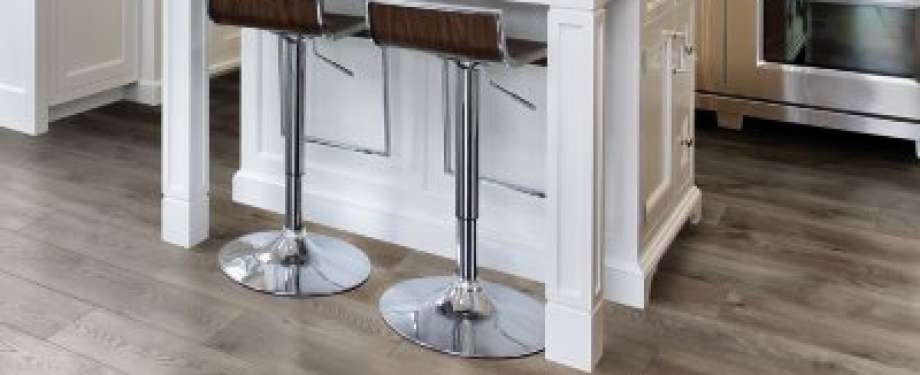
Are you thinking of installing new flooring at your place? Well, people mostly prefer durable flooring capable of handling the regular traffic load. Vinyl flooring fits that criteria as it is one of the most economical types available in the market. Its water-resistant properties, ease of installation, and low maintenance have already made it a popular choice for home and commercial buildings. Not to mention the aesthetic appeal and varying design choices that come along.
The North American Vinyl Flooring market touched the 324.4 Million Square Meters mark in 2020, and continued growth of 6.4% is expected over the next five years. In this article, we will discuss vinyl flooring, its composition, and its various types and designs. So, let’s delve into them!
What is Vinyl Flooring?
Vinyl flooring is a synthetic flooring type that consists of multiple layers. It was created to offer customers an easy flooring choice that doesn’t need any extra material before its installation. At the same time, the look that vinyl flooring has is nothing less than some of the most expensive stone, wood and other natural materials. But at way less cost.
What is Vinyl Flooring Made of?
The durability of vinyl flooring is one of its major selling points. Most of the vinyl flooring is made with a four-layer construction that is built to t last for years and decades:
Wear Layer
The topmost layer, the surface that we come in contact with, is a durable, wear-and-scuff-resistant urethane sealant. It is transparent in color. The durability and some of the water-resistant properties that vinyl flooring has are because of this wear layer.
Print Layer
The aesthetic element of vinyl flooring comes from the print layer. It is just below the transparent wear layer, so the design and patterns are visible. This layer mimics any type of stone, ceramic, or wood floor. In many cases, this layer is registered embossed, so that you not only get the look of a natural floor, but also the texture.
The Core
The core is what adds structural stability to the flooring. This layer’s materials and construction will vary depending on the type of vinyl floor you purchase. It could be rigid or flexible, made from pure vinyl, or vinyl that is reinforced with fiberglass or some other material.
Underlayment
The bottom layer that makes up the vinyl flooring is underlayment. It can be made of fiber, rubber, or foam. This layer of vinyl floors offers insulation, durability, cushion, and sound absorption properties.
What Are The Different Types of Vinyl Flooring?
Vinyl flooring has the following main types:
Vinyl Tile
Just like ceramic tiles, vinyl tiles are available in 9”, 12”, and 18” squares, as well as various rectangles. They are often used when you want a porcelain or stone look. You can lay them on a slightly upheaved surface too.
Vinyl Sheet or Rolls
Consider it the basic version of vinyl flooring. It has a softer core as compared to other types of vinyl floors. You’ll need to provide a clear base for its installation as well as durability. They are also inexpensive and work best on bathroom and kitchen floors. Vinyl sheet comes in large, flexible, and continuous sheets. It comes in with a width of 6 feet or 12 feet. You can choose from these options to furnish your home.
Vinyl Plank
The long, narrow, interlocking panels of the flooring are easy to install. They are thicker than vinyl sheets. Thick PVC forms the core, and they are available in many colors. Often used when you want to mimic the wooden floor look.
Luxury Vinyl Tile and Plank
Unlike the general vinyl tile and plank, Luxury Vinyl tile is five times thicker. They are created through 3D printers, thus replicating the look of natural wood. The core in luxury vinyl is most often reinforced with a fiberglass layer, with more premium floors using WPC (wood plastic composite) to add stability.
Vinyl Flooring Designs
While selecting the flooring for your place, you cannot ignore the aesthetic element. There are hundreds of designs available. Choosing from these main design inspiration categories is better before hopping on to the specific product design.
- Wood-inspired vinyl flooring
- Stone and Slate
- Porcelain and Ceramic Tile
- Marble-inspired
Comparative Analysis of Pros and Cons of Vinyl Flooring
Here is a comparative analysis of the strengths and weaknesses of vinyl flooring. So, you can mark the positives and negatives according to your requirements.

How to Install Vinyl Flooring?
Going through the installation process might tempt you to attempt DIY fixing. However, we advise you to get help from professionals. Although it is easy to install, any problems at this stage can result in premature wearing and damage to the entire flooring. Moreover, the installation method will differ depending on the exact type under consideration. Remove any existing layer (carpet, tiles, concrete, etc.) from underneath. Do not forget to scrap all the adhesive too.
- Interlocking installation – you can use the tongue and groove method. Align the planks like puzzle pieces and attach them through a click-lock.
- Glue-down installation – A special pressure-sensitive adhesive is added at the bottom in this installation type. That’s not done until you are ready to place the vinyl plank in its position.
- Loose Lay Installation – This type is risky for high-traffic areas, but you can use it for not-so-busy areas. You just have to place the tiles on the floor without adhesive or glue. The tile’s backing grips the subfloor, providing a perfect outlook.
- Peel and Stick Method – Manufacturers have already added an adhesive below in this method. You must peel the sticker and place the tile or plank in the desired position.
Vinyl flooring thickness for various applications.

Factors to Consider when Installing Vinyl Flooring
Below are the factors to consider when installing vinyl flooring:
Foot Traffic
Vinyl can be an excellent choice for areas with high foot traffic. Within vinyl flooring, you’ll find options with varied thicknesses that can serve your purpose.
Environmental Conditions
Another factor to consider before using vinyl flooring is the environment around it. Vinyl flooring can handle high traffic but not heavy loads. If you wish to have heavy equipment in the room, vinyl flooring is not the right choice. Vinyl flooring, particularly those without a reinforcing layer, are susceptible to temperature changes and should not be installed in areas of direct sunlight where the head will cause the floor to bubble or lift. Similarly, vinyl flooring type risks discoloration and fading from exposure to direct sunlight and damage by sharp objects (e.g., utility knife). If you have such conditions around, consider changing your choice.
Existing Floor
Your current floor type will also determine your consideration for installing vinyl flooring. You can install vinyl floors over an existing layer of the same floor type. But, you’ll need to prepare the base well if your floor has concrete or wooden floors as a current layer. Any bumps, pits or uneven surface elements will “telegraph” through vinyl and cause an uneven top surface.
What is the Difference Between Laminate and Vinyl Flooring?
Laminate is considered one of the alternatives to Vinyl flooring. So, you might be interested in knowing the difference between the two. Vinyl flooring consists of synthetic polymers, providing home and commercial owners with a water-resistant option. Laminate floors are made of a wood top layer and a high-density fiberboard, or a cross-construction wood core, which are then laminated together under a protective sheet. Compared to vinyl flooring, laminate flooring is more prone to moisture damage. But, many people find the designs in the laminate flooring type more natural and appealing than vinyl.
Regarding installation methods, vinyl offers more options, while most laminate floors are restricted to “floating” installation options. Maintaining a laminate floor requires a bit of delicacy, while vinyl flooring is considerably easy to maintain. From the cost point of view, luxury vinyl flooring is comparable to laminate, but varies on quality and manufacturers; otherwise, both options can be considered in the low to mid-cost flooring range. Within both these flooring types, Vinyl Flooring is often a winner for most people.
What is the difference between vinyl plank and vinyl tile?
- The only difference between vinyl plank and vinyl tile is the format. Both may be constructed in a variety of ways, with planks mimicking wood styles and cut in long planks as with wood floors, while vinyl tiles are made and cut to resemble ceramic or stone tiles.
What is sheet vinyl flooring?
- Sheet vinyl flooring is a subcategory of Vinyl flooring that comes in continuous and flexible layers. This is the most inexpensive category. However, the features associated with the vinyl flooring are all present in it. These sheets can provide good standing even on an unsteady base.
What is the best vinyl flooring?
- Without a doubt, luxury vinyl flooring is the best. They come with a better outlook than their counterparts and are much thicker, enhancing the floor’s durability.
What is the best adhesive for vinyl flooring?
- You can use acrylic-based adhesives for vinyl flooring. These adhesives can handle fluctuations in temperature and do not loosen up even in high moisture environments. You can buy it at an affordable cost per square foot of your vinyl flooring.
What is the difference between vinyl flooring and hardwood?
- Hardwood is a natural material used for floor creation, whereas vinyl is a synthetic material made of petroleum. Moreover, hardwood costs more than Vinyl Flooring. So, vinyl flooring is a good option to consider if you want a hardwood look at a lower price.
Summing up
This information on vinyl flooring will help you determine if the benefits of vinyl are right for your home. Even from the design perspective, it offers you hundreds of options. You can explore some of the best vinyl flooring designs at Central Floor Supply.
We ensure high-quality products and installation services. You can request a quote per square foot or get help from our cooperative staff in design selection. Explore the products at Central Floor Supply to make the best choice for your space.
Throughout history, natural stone has had many uses. Today we use it to enhance the appearance of our homes whether it be as a countertop or as flooring. Historically, it has been used for many different applications, such as a building material, to the creation of roads and monuments. Let’s dig in and see how several different civilizations used stone to enhance their lives.
The first civilization to master the art of stonework were the Egyptians. Their creations still amaze the world. Built out of limestone block around 2500 BC, the Pyramids remain a masterpiece that still attracts thousands of visitors annually. Casing stones are believed to have covered the rough limestone blocks. It is believed that over the years these smooth casing stones were stolen, leaving behind the limestone blocks. Another use of stone the Egyptians implemented was in the burial chamber of the pharaoh. The chamber itself is created by granite blocks. The craftsmanship of the construction is so precise, that one cannot even get a sheet of paper between where two blocks join.
The Greek Empire also had a passion for natural stone, especially marble. The Greeks learned stonework from the Egyptians. The Temple of Artemis was one of the seven wonders of the ancient world. Over one hundred columns and steps were all made out of marble. The columns were over five stories high. The Temple was partially destroyed and laid in ruins by 401 AD. The Greeks were the first civilization to use marble in their residential dwellings, lining the baths and pools with gorgeous stone.
The Romans had a whole different concept as to how to use stone. Around the first century AD, the Roman Empire ruled the world. This achievement was made possible by their use of granite slabs that they engineered into roads. These roads allowed the Roman Empire to move troops quickly and effectively. Also these roads enabled trading. Another use of natural stone that the Roman Empire implemented was in their aqueduct system and their temples. The Romans had a unique method of constructing their temples. Unlike other civilizations, they would build their buildings out of brick and mortar, and then line them with the marble slabs. This allowed for faster construction and it is a method that is still used today.
As you can see, at Murad Floors, our love and passion for natural stone as a building material in our homes is not something new. Thousands of years ago, starting with the Egyptians, natural stone was used to enhance and add grandeur to the Pyramids inside and out. The Greeks used natural stone as a way to bring elegance into homes. The Romans were able to conquer the world at that time thanks to the use of natural stone to build roads. Today, we use natural stone in our homes to bring that sense of majesty and charm into our living spaces that were once used to glorify the accomplishments of a civilization. It is a truly majestical connection that we have with natural stone, one that will continue for centuries to come.
What is natural stone?
 Natural Stone” is defined as an organic solid composition made up of natural minerals quarried from the earth. The origin story of natural stone starts million years ago, as a combination of heat and pressure condensed various minerals to form solid rocks in the ground. As the earth’s crust began to grow and erode, it pushed these minerals from its core and formed massive rock deposits, which serve as the quarries from which we mine natural stone today.
These products of the earth are more than just rocks. The stone that is quarried for design and architecture is hand-picked from the best, highest-quality sources. Stone experts around the world select the most consistent, beautiful, and durable natural stones, combining art and science to produce timeless products.
What are the types of natural stone?
There are many different types of natural stone. Each kind has its own set of properties that make it unique.
Granite
Granite is among one of the most popular natural stones on the market. It is one of the hardest and most durable materials, and requires little maintenance. Granite is ideal for a number of projects including countertops, fireplaces, outdoor projects, floors and more. It comes in a variety of colors, textures and finishes.
Limestone
With its unique appearance and durable features, Limestone is among one of the most diverse stones. It is used both indoors and outdoors in a variety of projects including road construction, building materials and more.
Marble
Although marble is more susceptible to scratching and staining, it has an elegant appearance that is attractive to many homeowners. Marble is a classic natural stone. It has been the go-to material for architectural projects for many years.
Onyx
Onyx is one of the most unique natural stones. Although it is not as durable as other stones, it has translucent properties and the ability to be backlit, making it ideal for statement walls, fireplaces and art pieces.
Quartzite
Quartzite is a great material for high-traffic areas such as kitchens. It is among one of the hardest and most durable stones, meaning scratching and wear-and-tear will not be a problem. These natural stone slabs also have unique hues that can add extra appeal to any space.
Slate
This natural stone is the ideal indoor and outdoor material. Because it is a metamorphic rock, it is dense, durable and resistant to acids and staining. Many home and business owners use slate in high-traffic areas as a flooring material.
Soapstone
Soapstone is a non-porous material that is softer to the touch compared to other natural stones. Because of its softer texture, it can be more prone to scratches, however, these imperfections can easily be repaired using mineral oils.
Travertine
Travertine has a fibrous appearance, is relatively soft in touch and is mainly used for construction purposes.
Where can I use natural stone?
Natural stone slabs have become a popular choice for many homeowners. These versatile materials can be used both indoors and outdoors in a variety of places including countertops, flooring, landscaping, fireplaces, walkways, vanities and more. There is no limit to what you can do with natural stone.
Why should I use natural stone?
There are endless benefits of using natural stone. Not only are natural stones unique and beautiful, they are durable, easy to maintain, environmentally friendly, versatile and can add value to your home.
At Murad Floors, our professionals help you choose a natural stone that reflects your style, preferences, and personal taste. We can help you achieve the look you want. Visit our website or give us a call to learn more!
Bulk Continuous Filament (BCF)
Bulk Continuous Filament (BCF) is the name given to synthetic yarns that are made by a mechanical process to fluff them out before the yarn is used for tufting or weaving.
If you’re thinking that rug makers in different parts of the world have different preferences about the type of natural fiber they use, you’re right! Wool and silk are the most commonly used rug materials in Asia, India, the Middle East and Central America. Sisal, jute and sea grass are the rug materials used most often in Mexico, Brazil, Africa and some parts of Asia.
Natural fibers are used in both hand-made and machine-made rugs. On the other hand, synthetic fibers are used exclusively in commercially produced (machine-made) rugs, no matter which country they come from.
Some of the most popular rugs are blends where two (or more) types of rug material are combined to make a rug that has the characteristics of one material enhanced with those of another. It might be a wool rug with silk highlights, a wool and cotton blend or a mix of natural and synthetic materials. The result can be a rug that has a more desired look or feel, along with more durability and/or value
HAND LOOMED AND FLAT WEAVE
These are done on a loom and the process takes 1-4 people depending on the size of the rug. On the loom, the yarn or weft is thrown through the middle of the bottom and top warp. The weaver then compacts the rug with the beater and the weft and warp are woven together. This alone is considered a flatweave.
 [source]
A pile is the difference between a flatweave and a loomed rug. To make the pile, the weaver uses the same technique as discussed above but, instead of yarn, the weaver places a rod or pipe through the middle of the warp. This lifts the yarn and creates a pile. The weaver will use both techniques (yarn and pipe) interchangeably throughout the rug. To finish, the loops created by the pipe are either left or cut to have a fuller finish.
Tufted Rugs
This hand-tufted rug is also known as hand-crafted or handmade, but it is made using a modified hand-held drill gun that inserts the piles into a cloth foundation and creates a loop pile. If the loop pile is sheared then it becomes a cut pile, the loop pile rug if not sheared is called a “Hand-hooked rug”.
Some rug
designs have both cut pile and loop pile combined for creating a dimensional effect to the pattern, a latex coating is then applied to the back of the rug for holding the “tufts” in place. And a canvas–type fabric is then applied over the latex coating for finishing the back of the rugs.
These types of rugs have a handmade look but they cost much less because using the gun speeds up the process dramatically, for example, a good quality 8’x20’ hand-knotted rug might take anywhere from 7 to 14 months it is depending on the quality, while the same size rug made in a hand-tufted method might take one day.
HAND TUFTED RUGS
Tufted rugs are similar to loomed rugs but built in different ways. Instead of starting with a warp and making the weft using the loom, a tufted rug starts with a foundation cloth. The foundation cloth is pre-woven fabric with small squares.

[source]
The foundation cloth is then hung and stretched tight. From here, a tufting gun is used to create the design. The yarn is shot (from the tufting gun) through the back of the rug to the front. The yarn is then cut or shaved and the pile is created.
By using a foundation cloth, you do not have to adhere to the normal rug building structure of row by row. The design can be made sporadically and enables the weaver to make more precise designs. Instead of building a mosaic from the bottom up, you can make individual pieces one at a time.
Viscose
Viscose, made from wood pulp, is a shiny, silk-like fiber. Viscose is susceptible to matting when it is used on its own. However, when used as an accent or in a blend it becomes an excellent replacement for real, and higher-priced, silk.
Rayon is a synthetic material that has a resemblance to silk. Rayon is derived from wood (made from cellulose found in trees). Although it is similar to silk in its look and feel, rayon will melt if it is exposed to open flame.
arpet Binding & Serging 101
You want to achieve the perfect look for your space. You’ve picked out the ideal carpet — one that adds all the right touches and nuances you’re after. What better way to finish it off than with customized carpet binding or serging?
In this post, you’ll find a comprehensive intro to all things carpet edging. We’ll cover the basics of carpet binding and serging, including:

What is Carpet Binding?
Carpet binding and serging are two kinds of carpet edging, or ways of finishing off the rough sides of a piece of cut carpet. They’ve been used throughout the history of carpetmaking.
A bound carpet has a strip of fabric or other material — like jute or leather — that’s attached to the top side of the rug and wraps around the raw edges.
Serged rugs are finished with sturdy thread that’s stitched around the carpet’s periphery.
Why Edge a Carpet
Binding or serging does more than just turn an unfinished carpet cut into a finished rug. Carpet edging can accomplish a host of things, like:
- Creating a signature aesthetic through the use of color, pattern, texture, and finishing technique. You’re basically building your own custom area rug or runner!
- Making your rug more secure and durable by preventing unraveling and helping the rug keep its original shape.
- Sustainability and preservation of value by extending the life of your rug and enabling you to refurbish carpets with worn-out trim.
- Flexibility of style so that you can adjust the appearance or utility of your rug as the décor or function of your space evolves.
As you can see, carpet edging is about beauty as much as it’s about performance and personalization as much as longevity.

Things to Know About Carpet Binding
Familiarizing yourself with the many details of carpet edging is a smart place to start. After all, you’ll rapidly find that you have loads of options and several decision points during your carpet-buying adventure.
Carpet Edging Options & Finishing Techniques
Your finished rug will be a culmination of numerous choices you make along the way. You’ll need to specify edging options.
- Binding or serging. Binding is the standard — but serging is incredibly popular, too.
- Hand or machine. Hand serging has an authentic, artisanal flair. Machine serging is a more neat and consistent edge finish.
- Narrow or wide. Narrow binding is the norm and can be sewn on with either synthetic or cotton tape. It shows about .25 inch on the face of the rug. Wide binding, which is between 1.5 and 3.5 inches, is used when you want to show more binding on the rug.
- Fringe or plain edge. Fringing offers that tassel-bordered effect that suits so many tastes. Conversely, the unadorned look of a plain edge is so versatile.

Textures & Materials
Binding fabrics come in tons of widths and fibers. You can go for the likes of:
- Cotton
- Linen
- Jute
- Leather
- Recycled leather
- Microfiber
- Indoor/outdoor fabric
- Nylon
Hand serging is done with wool thread, while machine serging can accommodate synthetic threads.

Color Scheme
You’ll have no shortage of patterns and hues! Finishing materials are available in infinite colors.
At Landry & Arcari, narrow binding is stocked in 60 colors (cotton). Wide binding (cotton) and serging thread are available in 90 colors each. Plus, thread for hand serging can be dyed to match!
When you factor in all the custom-order or self-provided fabrics — it’s clear that your palette is limitless.

Corners
With a wide bind, you have two options for how to finish the corners: mitered or folded (aka lapped).
- Mitered corners resemble the corners of a picture frame, with the seams at an angle and a visible top stitch.

- Folded corners turn the finishing material over at the corners, such that the seams are parallel with the edge, and also have a visible top stitch.

How long will carpet binding last?
It’s impossible to say because the service life of your carpet edging depends on a number of factors. Wear and tear can be influenced by:
- How your rug was finished. Both the materials and methods used to bind or serge your carpet make a difference. Each alternative has its own unique durability profile.
- The amount and distribution of foot traffic. A rug that’s tread on a lot will deteriorate sooner than one that’s rarely stepped upon. Plus, uneven traffic patterns may degrade a given area more than another.
- Environmental conditions. Extreme climate — indoors or outside — can affect the longevity of your rug. Fibers tend to break down more quickly when subjected to high heat, dryness, or moisture. Exposure to dust, smoke, pets, and pests can also hasten the end of your carpet’s usability.
However, when all’s said and done, a serged or bound carpet should last several years. It’s more likely that you’ll be driven to purchase a new rug and edging because you want to redecorate — not because your current carpet’s worn out.
Considerations for Carpet Binding
With the information above in mind, you’re now well-positioned to assess these components in the context of “the real world.” This will guide you in knowing what options to choose and why — which ups the likelihood that you get your dream carpet!
So, as you’re thinking about which edging method you want, consider the following:
- Materials. Leather is often associated with looking cool, punk, chic, or rustic. Wide binding can dress up your rug and gives it a custom look.
- Colors. You can choose a binding color to tie in with the rug and the rest of your décor (helping it to disappear) or you can get a contrasting color to make a statement (the binding pops out).
- Traffic. The volume and nature of carpet use are important. Hand serging is the most durable edging option. Cotton binding stains the easiest.
Carpet Binding Process
The end-to-end process for edging a carpet is fairly simple and straightforward.
Prior to the actual edging being done, you’ll need to select the finishing technique and materials you want. Alternatively, if you’re working with us, you can let our talented fabrication team choose appropriate options for you.
Then, your carpet is ready to hit the production room. For bound-edged rugs, the fabric is folded over the edge of the carpet and then sewn to the carpet with a large binding sewing machine. Serged carpets are either done by a specialized machine or painstakingly hand-stitched by an expert.
How long does carpet binding take?
The amount of time required to edge a carpet varies.
Size of the rug and binding or serging material and method are the main determinants.
- The larger a carpet is, the longer it takes to transform it into an edged rug.
- Special-order fabrics can delay the start.
- Edging done by hand progresses slower than machine processing.
For bound carpets, corner type is another variable. Mitered corners are more work — and therefore more time-consuming — than folded corners.
Hand serging can take 5-7 weeks to complete while machine serging can take as little as 5-7 days’ fabrication time.
Additionally, all carpet edging projects require prep work, equipment and supplies set-up, and finalizing tasks.
As a rule of thumb, though, you can expect a smaller rug (4’ by 6’) that’s machine bound with an in-stock fabric and folded corners to take about a day or two. From there, it’s generally safe to assume that each customization or bit of complexity tacks on time.
Rug Binding Costs
Price is determined by the rug size, materials and methods used, and production costs. You’re charged by the linear foot (i.e., equal to the rug’s perimeter). Mitered corners are more than folded ones. Fancier or more exclusive fibers are spendier than simpler or standard alternatives.
To give you a ballpark impression of the cost of carpet binding and serging, let’s look at a few industry-wide averages:
- $ Narrow binding is about $3-$5 per linear foot.
- $$ Wide binding and serging cost about $8-$10 per linear foot.
- $$$ Hand serging with dyed-to-match thread is $30-$50 per linear foot.
At Landry & Arcari, our prices include the cost of material, labor, etc., no matter the color.
However, we sell linen, jute, and leather binding materials separately. So, the total ticket price for your finished rug will cost around $7-$10 per linear foot (labor and overhead) + $6-$30 per linear foot (materials) + the price of the carpet.
You can also opt to buy upholstery-grade fabric and bring it to us to create a border. This is a mid-range price option ($$).

Where to Get a Rug Cut & Bound
Getting a high-quality rug is an investment of time and money. You’re going to live with your carpet for a long time — so it’s worth having the finishing work done properly.
If you’re in the New England area, we’re here to help you get the rug — carpet and edging — you’re longing for. Our knowledgeable staff and master craftspeople are ready to answer questions, assist in picking carpets and finishes, and fulfill your order.
For those who are outside our service area or like to shop in person, we recommend that you research the carpet sellers in your locale to find a reputable dealer. Visit their showrooms and talk to their staff. Ask for referrals from friends, family members, or local interior design firms. You can even contact us for recommendations!
Landry & Arcari, for When You’re Bound & Determined to Get the Best-Edged Carpets
Is today the day that your flooring goes from being something that’s just under foot to something that stands out? We hope so!
Now that you’re primed with the necessary knowledge to create your optimal carpet, it’s time to take the next step.
Reason #1 – Natural Stones Can Fit into the Structure of Fireplace
Be it the traditional layout of your fireplace design or a modern design aligned to a theme, and you can find suitable stone types, sizes, and shapes of natural stones in desired colors, tones, and patterns.
You can use natural stones as a whole piece like stone brick or block as a structural element. You can apply stone tiles or slabs in the construction of horizontal elements of a fireplace and surround.
Stone veneers or stone tiles are excellent choices for vertical application in the construction of fireplace components right from bottom to top. Stone crafts have enough room to give the fireplace an artistry look-n-feel. |
Reason #2 – Natural Stones Can Fit into Any Type of Fireplace
We have seen that traditional fireplace designs and the modern structure of fireplaces. Fortunately, both types of fireplace categories permit the extensive applications of natural stones in their structural components and decorative elements. |
Different Types of Fuels Used in Fireplaces
We know that traditional fireplaces are using a range of different traditional fuels to generate heat. Wood and coal are predominant fuels, while charcoal and coke, a carbonized coal, are available in certain regions only.
The modern fireplace designs allow the use of various natural gases like propane, butane, and methane. However, natural gas is mostly methane, while liquefied petroleum gas contains mostly propane.
Besides these, Ethanol, like liquid alcohol also available in gels. Similarly, electricity-based fireplace designs also available in the market.
Reason #3 – Natural Stones Can Fit into Any Type of Fuel Used into Fireplace
We know traditional fuels like woods and coals are emitting smokes and ash or carbon traces in the air. If you have used natural stones as stacked stones or veneer/tiles, cleaning and maintenance become easy. No profound damages occur in natural stone components that keep natural beauty intact. |
Reason #4 – Natural Stones Can Tolerate Extremes of Heats of Fireplace
When fuel burns into the fireplace, it generates the heat, and fireplace structure must have heat resistant elements used in the construction to last for longer. Natural stone has a built-in capacity to tolerate high temperatures without any structural damage. |
Reason #5 – Natural Stones in Fireplace Design Are Easy to Clean & Maintain
These natural fuel resources emit the carbon dioxide like gases, which are containing ash are other half-burnt substances, which create a black layer over the open surfaces in the fireplace and its different parts like the hearth and chimney.
Natural stones with proper surface treatments allow easy cleaning & maintenance. Stones in the form of bricks, veneer, slabs, or tiles are easy to replace without more work on the entire structure of the fireplace. |
Reason #6 – Natural Stones Give Fireplace Durability
We have seen the durability of different natural stones in our previous blog, “The Durability of Natural Stone – All You Need to Know.” It means the natural stone is the sturdiest material ever used in the construction of fireplaces. Natural stones can bear blunt force impacts, climatic changes, weathering effects, and wear & tear effects due to natural as well as human factors. |
Reason #7 – Natural Stones Give Fireplace Longevity
If you have visited historical places with fireplace structures, natural stones give fireplaces a classic impact. Weathering effects on limestone, marble, and granite-like commonly used stone types render them more aesthetics and timeless appearance than any construction material can do it. |
Reason #8 – Natural Stones Give Fireplace Security
Any petroleum-based material, be it as a base material or mere coating, proves dangerous if it gets profound exposure to the heat or fire. The same goes true somewhat for metals.
Clay bricks and cement also consider weaker material for heat resistance requirements. Here, natural stones are apparent winners, be they calcareous or siliceous, stay intact against heat and other wear & tear factors for centuries. Natural stones are entirely non-flammable and safe construction material for fireplaces. |
Reason #9 – Natural Stones Give Fireplace Sustainability
Natural stone, as its name suggests, is a natural product from Mother Earth. Moreover, its acquisition/quarrying processes are green in all aspects. Recycling of natural stone products also yields reusable or environment-friendly residues or by-products. It means natural stones are sustainable products to decorate your fireplace like attention-grabbing spaces. |
Reason #10 – Natural Stones Give Fireplace Natural Beauty
We know natural stones have grains and veins in the natural patterns. It gives natural stones the natural beauty, a unique texture, and distinct characteristics thanks to varied compositions and formation processes. It is almost impossible to mimic the same things in artificial stones like porcelain and ceramic tiles.
If you intended to adorn the natural beauty to your fireplace, natural stone is an unbeatable choice. For instance, |
Marbles in Outdoor/Indoor Fireplace
| Marble at the fireplace gives a serene ambiance. Marbles offer a treasure of colors, patterns, and textures to yield desired impacts. |
Limestone in Outdoor Fireplace
| When you look for absolute simplicity, limestone has it. If you want to carve some arts on stones, limestone is excellent for it. If you are inclined to have a rustic look, stacked limestone is a choice for such sophistication. |
Sandstone in Fireplace
| If you have a thirst for a classic and natural look in your fireplace design, sandstone is an unbeatable choice. Outdoor fireplaces with sandstone can give essential properties in exterior places like hardness, weather resistance, and durability. |
Granite in Fireplace
| If your taste is for a contemporary and decent yet clean appearance, granite is the best candidate for the same. Granite lets you write a signature of design and proves a centerpiece of your space where the fireplace located. |
Travertine in Fireplace
| Travertine bricks, when stacked, give a rustic appearance for your fireplace. Being a kind of limestone, it also lets you carve custom ways. If you go for tiles or veneers made of travertine, it might end up in a contemporary look. |
Slate in Fireplace
| When you run for rustic cottage style, the slate stone can give you a fantastic option. When slate stacked, it can create a more luxurious texture and lines, and you never get with any alternative. |