
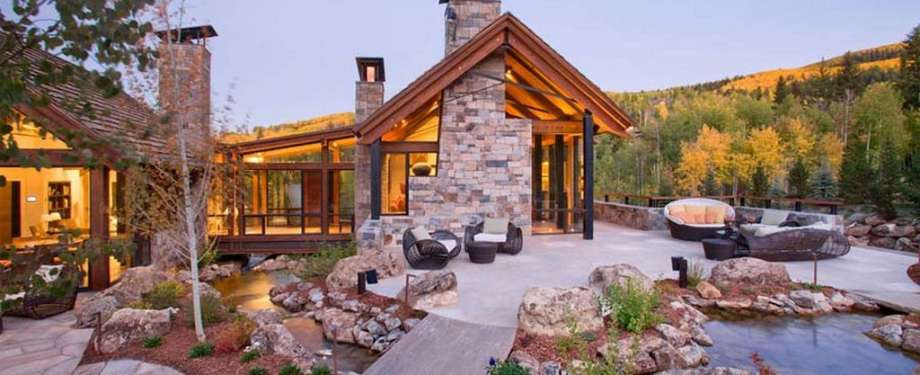
Throughout history, natural stone has had many uses. Today we use it to enhance the appearance of our homes whether it be as a countertop or as flooring. Historically, it has been used for many different applications, such as a building material, to the creation of roads and monuments. Let’s dig in and see how several different civilizations used stone to enhance their lives.
The first civilization to master the art of stonework were the Egyptians. Their creations still amaze the world. Built out of limestone block around 2500 BC, the Pyramids remain a masterpiece that still attracts thousands of visitors annually. Casing stones are believed to have covered the rough limestone blocks. It is believed that over the years these smooth casing stones were stolen, leaving behind the limestone blocks. Another use of stone the Egyptians implemented was in the burial chamber of the pharaoh. The chamber itself is created by granite blocks. The craftsmanship of the construction is so precise, that one cannot even get a sheet of paper between where two blocks join.
The Greek Empire also had a passion for natural stone, especially marble. The Greeks learned stonework from the Egyptians. The Temple of Artemis was one of the seven wonders of the ancient world. Over one hundred columns and steps were all made out of marble. The columns were over five stories high. The Temple was partially destroyed and laid in ruins by 401 AD. The Greeks were the first civilization to use marble in their residential dwellings, lining the baths and pools with gorgeous stone.
The Romans had a whole different concept as to how to use stone. Around the first century AD, the Roman Empire ruled the world. This achievement was made possible by their use of granite slabs that they engineered into roads. These roads allowed the Roman Empire to move troops quickly and effectively. Also, these roads enabled trading. Another use of natural stone that the roman empire implemented was in their aqueduct system and their temples. The Roman had a unique method of construction their temples. unlike other civilizations, they would build their buildings out of brick and mortar, and then line them with the marble slabs. This allowed for faster construction, and it is a method that is still used today.
As you can see, at Murad Floors, our love and passion for natural stone as a building material in our homes is not something new. Thousands of years ago, starting with the Egyptians, natural stone was used to enhance and add grandeur to the Pyramids inside and out. The Greeks used natural stone as a way to bring elegance into homes. The Romans were able to conquer the world at that time thanks to the use of natural stone to build roads. Today, we use natural stone in our homes to bring that sense of majesty and charm into our living spaces that were once used to glorify the accomplishments of a civilization. It is a truly majestical connection that we have with natural stone, one that will continue for centuries to come.

 There are various types of stones available in the today’s stone market. All these stones are the mixture of different minerals and have different levels of durability, hardness. The questions like what kind of minerals are present in it…? where these stones come from…? at which place the particular stone suits well…? often comes to the mind while selecting natural stones. All these stones are real and durable but differ in their properties and compositions. After the deep study of the earth’s physical structure and substances, natural stone classifies on the geological basis. Let’s discuss the types of these stone.
 The tumbled finish is essentially an ageing effect, best suited for highly resistant natural stones. This is a popular finish because it creates softer surfaces and rumbled edges. It’s a very aesthetically pleasing choice for external pavers.
 A matte-textured surface finish is produced by small particles (“sand”) striking the stone surface at high velocities. A sandblasted finish is achieved by blasting the stone several times with an air gun containing an abrasive agent such as silica sand. This gives the stone a textured finish and can even lighten its color.
 For a flamed or thermal finish, the surface of the stone is directly exposed to high temperatures, typically in the form of a flame. This process alters the natural color of the stone and gives it a characteristic roughness. Stones that have a flamed finish tend to have greater anti-slip properties. This makes them a perfect choice for outdoor paving.
 A sawed (or sawn) finish describes a stone’s appearance where it has been cut by a blade and some of the saw marks are still visible. This results in a textured, irregular surface with a rough feel. As a sawed finish can make stones slip-resistant, it’s a popular choice for external applications such as paving, walkways, patios, driveways and outdoor steps.
 An acid-washed finish is achieved by applying corrosive chemicals on the stone’s surface. These chemicals burn through the stone, creating small pitted indentations on the stone’s surface. This gives it a naturally rustic look and feel. The advantage of an acid-washed finish is that any scratches on the stone (which will happen over time with wear and tear) are much less visible.
  A honed finish is achieved when rubber heads smooth out the stone’s surface to create an overall consistency and uniformity in the stone’s texture. Honed finishes have a smooth, non-reflective, satiny sheen and are used for both interior stone surfaces. When manufacturers are finalizing a honed finish, they typically sand the stone just before it reaches the polishing phase. This accounts for its lack of glossiness and gives the stone a more matte appearance.
  To achieve a polished finish, the natural stone undergoes repeated treatment with abrasives until a glossy, mirror-like surface is achieved. This process brings the stone’s natural colors and character to life and makes its porosity virtually invisible. An advantage of a polished finish is that it can boost the stone’s overall resistance.
 This finish is used mostly on our outdoor Porcelain Tiles and Pavers, a favorite in our Porcelain Pavers range. Micro-sanding technology creates a sand-paper-like finish that gives these pavers a high slip resistance and recreates the look and feel of natural sandstone. This finish makes Sandstone Porcelain Pavers, pictured below, an ideal choice for pools, wet areas and walkways exposed to the elements.